Yaesu FTDX3000
Exceptional Receiver Burdened by Quirky Ergonomics — a world-class FTDX5000-derived receiver wrapped in a front panel that fights you every step of the way.
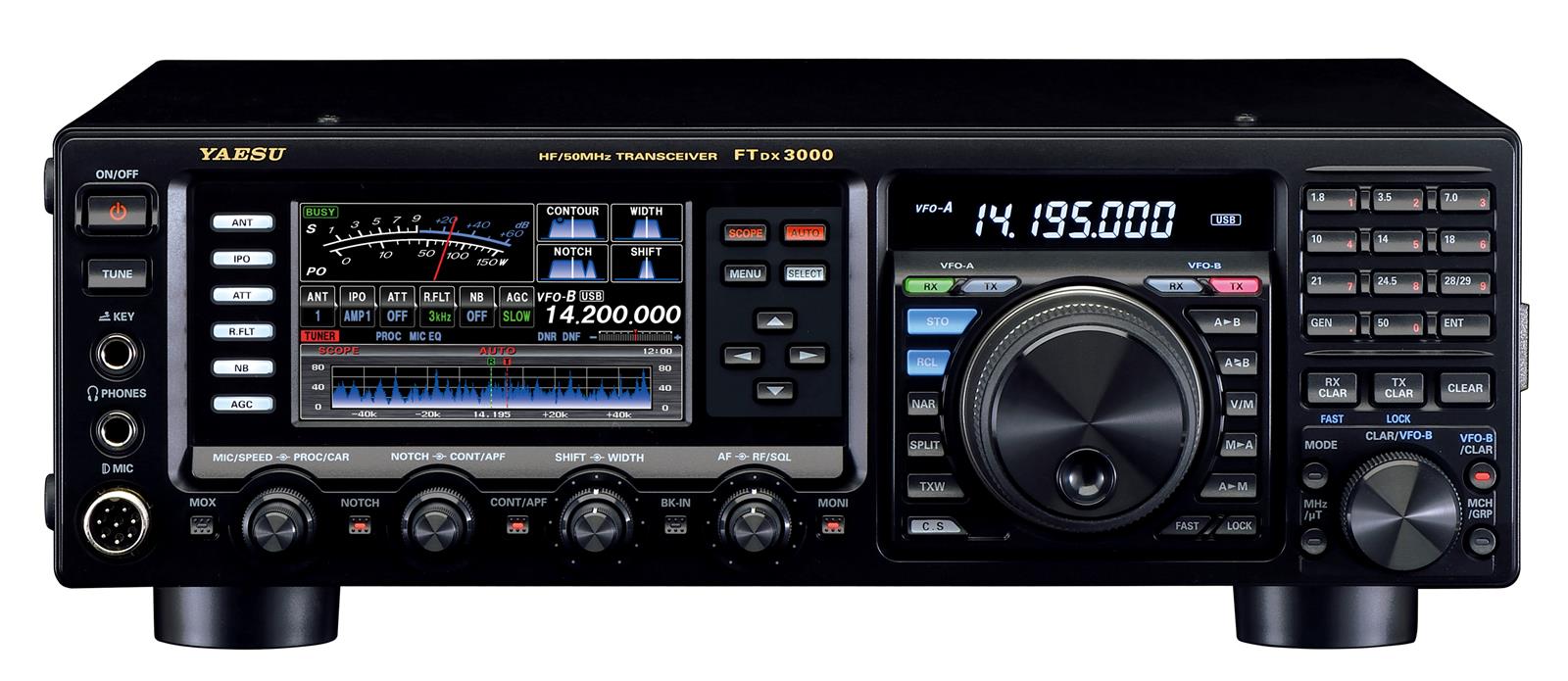
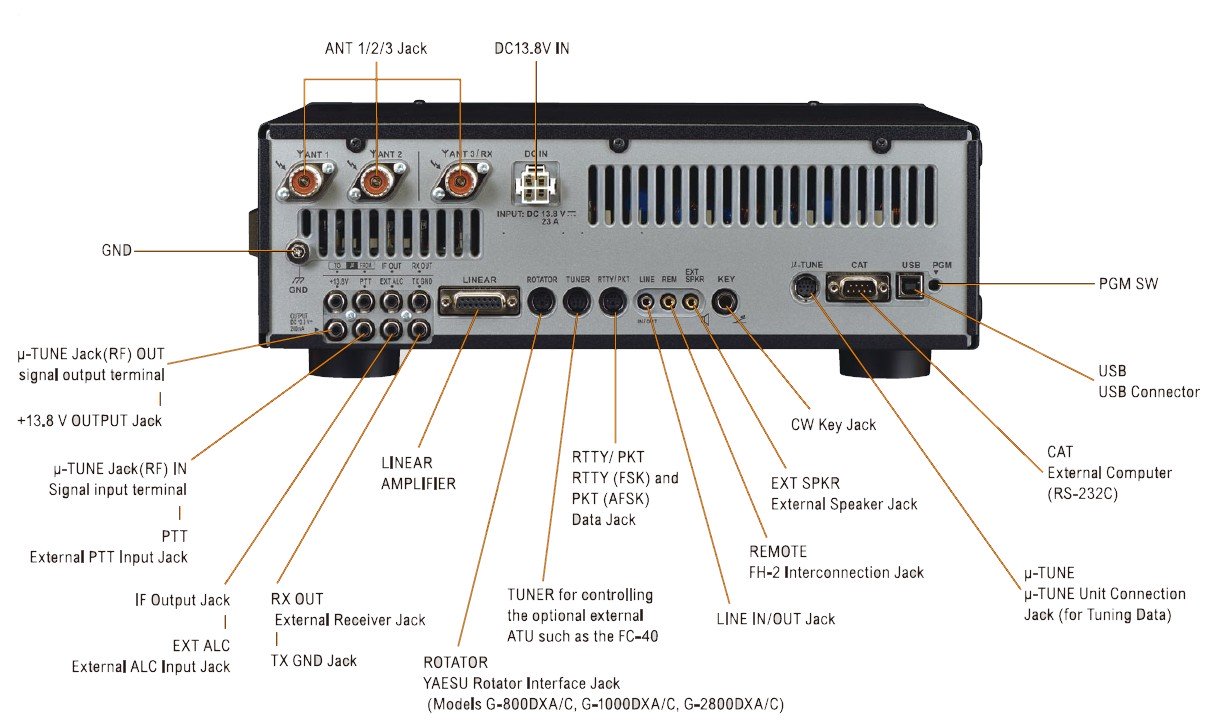
- World-class, FTDX5000-derived receiver
- Razor-sharp 300 Hz roofing filter + DNR
- Gorgeous, legible color TFT display
- Fast, quiet, reliable internal ATU
- CW decode + Audio Peaking Filter combo
- 9 MHz IF output for external SDR panadapter
- Multi-function knobs are a menu-diving trap
- Deeply layered, steep-learning-curve menus
- Non-illuminated buttons — rough in a dark shack
- Built-in spectrum scope is small and slow
- Unsigned firmware updater flagged as malware
- No built-in 2m/70cm — not a true shack-in-a-box
| Frequency Coverage | HF + 50 MHz (160–6m), general coverage RX from 30 kHz |
|---|---|
| Power Output | 5–100W (25W AM) |
| Receiver Architecture | Down-conversion, 1st IF at 9 MHz — derived from the FTDX5000 |
| Roofing Filters | 3 kHz (SSB) standard, 600 Hz (CW) standard, 300 Hz (CW) optional |
| Dynamic Range | ~108 dB at 10 kHz spacing, ~106 dB at 2 kHz spacing |
| Display | 3.5″ color TFT, 480 × 272, with built-in spectrum scope |
| Antenna Tuner | Built-in automatic tuner |
| CW Features | Automatic CW decode, Audio Peaking Filter (APF), full QSK |
| Mic EQ | 3-band parametric microphone equalizer |
| IF Output | 9 MHz rear-panel IF out for external SDR/panadapter |
| Dimensions | 14.4″ W × 4.5″ H × 12.3″ D |
| Weight | ~22 lbs |
| Manufacturer | Yaesu ↗ |
Overview
The Yaesu FTDX3000 is a highly capable HF/6-meter transceiver that delivers top-tier RF performance where it matters most, even if it forces the operator to endure some frustrating layout and software choices. After putting this rig through its paces in the shack and cross-referencing my findings with the broader ham community on eHam, here is the definitive breakdown.
1. The Positives: World-Class Receive & Display
Outstanding, ultra-quiet receiver. The crown jewel of the FTDX3000 is its receiver architecture. Derived from the high-end FTDX5000 down-conversion design, it is incredibly sensitive and remarkably quiet. When chasing weak signals or digging contacts out of a noisy urban environment, the Digital Noise Reduction (DNR) and the razor-sharp 300 Hz roofing filter do a phenomenal job. It handles adjacent-channel pileups with ease, slicing cleanly between stations only a couple of kilohertz apart.
- High-resolution TFT display: Sharp, highly legible, and tracks information beautifully. The dynamic AF-FFT display is incredibly practical for visually dropping a notch filter precisely onto an interfering carrier.
- CW decode & tuner: The internal automatic antenna tuner is fast, quiet, and highly reliable. The built-in CW automatic decode is a nice touch on-screen, pairing well with the Audio Peaking Filter (APF) for clean, fatigue-free audio over long operating sessions.
2. The Cons: Misleading Ergonomics & UI Traps
Ergonomically, the front panel features some misleading design elements. Several of the concentric adjustment knobs on the bottom of the faceplate share multiple duties — but not intuitively.
- The multi-function knob “trap”: MIC gain, SPEED, and PROC (Processor) share the exact same physical control. Instead of just grabbing a dedicated knob, you have to dive into the menu system just to assign which function that knob controls at that moment — a real workflow bottleneck during active operation.
- Dark buttons, cumbersome menus: The menu structure is deeply layered with a steep learning curve. Compounding this, the front-panel buttons do not illuminate — in a dim or dark shack, the mid-grey legends become nearly impossible to read.
- Missing VHF/UHF: For a base-station rig at this tier, it's disappointing that Yaesu didn't include 2m/70cm coverage, forcing you to run separate rigs for local nets.
Frustrating firmware upgrades: Updating the radio's firmware is a pain — the proprietary Yaesu utility is unsigned, so modern Windows installs immediately flag it as a malicious threat, forcing you to manually bypass safety protocols just to flash your radio.
3. What the Community Says on eHam
- The parametric EQ is a savior: Many eHam reviewers note that while the stock hand mic (MH-31) can sound muddy out of the box, the deep-menu 3-band Parametric Microphone Equalizer can make even the stock mic sound like an expensive studio condenser once configured.
- Noisy QSK relay: Hardcore CW operators frequently complain that the full-QSK (break-in) relay is loud and clacky — headphones are basically mandatory.
- Software to the rescue: Because the physical ergonomics are so widely critiqued, much of the community recommends third-party control software like the Win4Yaesu Suite, which brings the buried menu options and knob assignments onto your desktop via virtual sliders, bypassing the front-panel headaches entirely.
4. Price & Competition Comparison
At its price point, the FTDX3000 faces stiff competition from rigs like the Icom IC-7300 and the Kenwood TS-590S.
| Radio | Strength vs. FTDX3000 |
|---|---|
| Icom IC-7300 | Modern touchscreen, real-time waterfall out of the box — easier “shack-in-a-box” experience |
| Kenwood TS-590S | Similar class/price tier, but fewer roofing filter options and a smaller display |
While the FTDX3000's physical receiver filtering and ultra-low noise floor beat the IC-7300 in heavy thunderstorm noise or crowded contest pileups, the Icom is the easier, more intuitive day-to-day experience right out of the box.