K4KIO Broadband Hex Beam
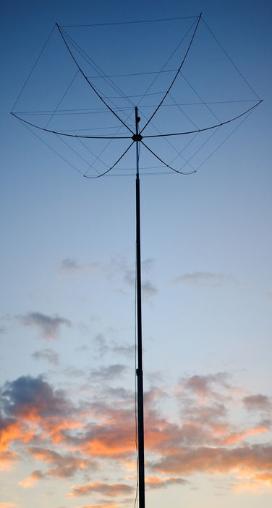
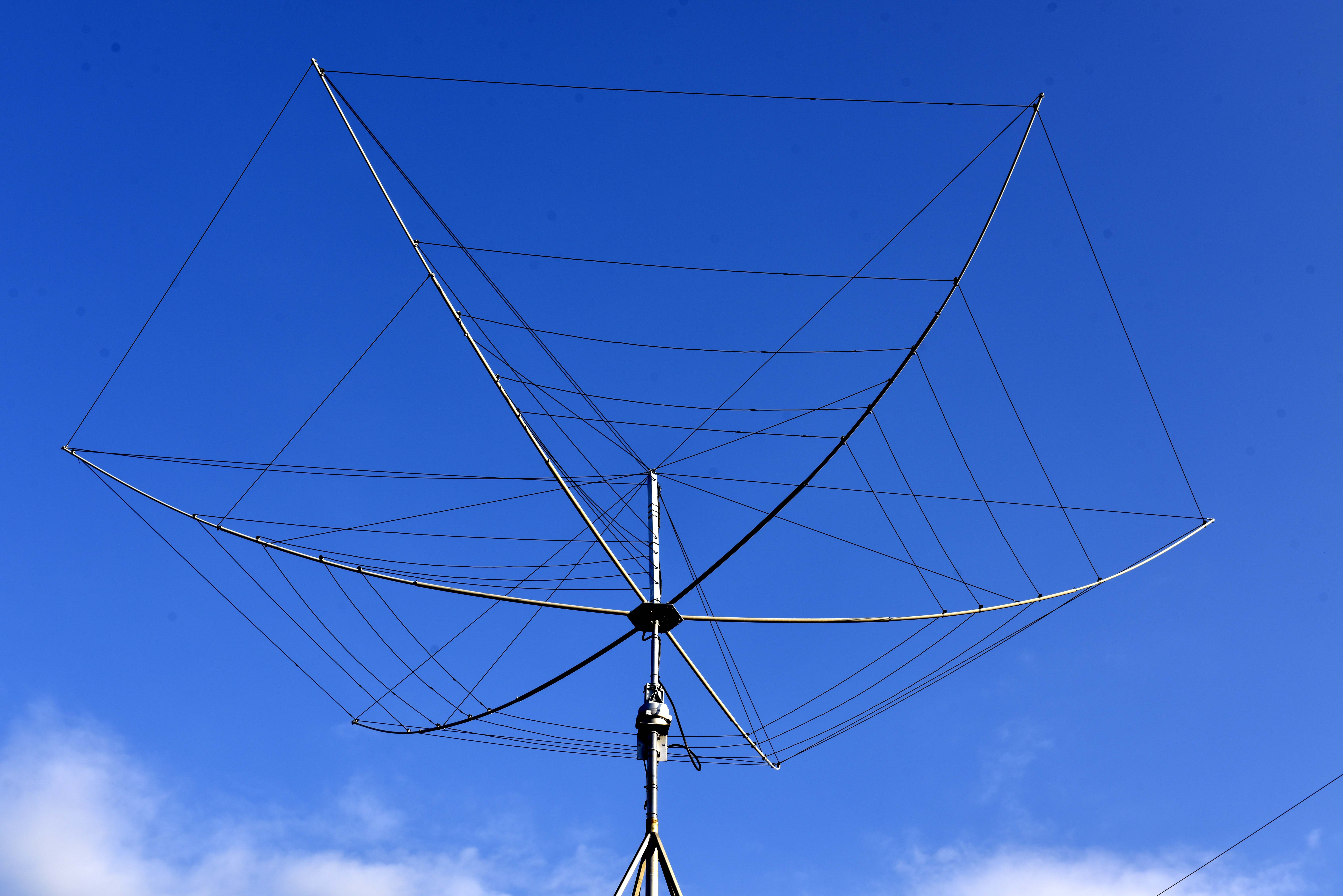
Yagi-class directional performance on 6 HF bands — in a package you can actually fit in a suburban backyard.
- True plug-and-play — no wire trimming or measuring
- 6 bands on a single 50‑ohm feedline
- Compact footprint fits where a Yagi never could
- Three flexible mounting methods
- Survives 90+ MPH winds and ice storms
- Excellent customer service from Leo (K4KIO)
| Bands | 20, 17, 15, 12, 10, 6 meters |
|---|---|
| Design | G3TXQ Broadband Hex Beam |
| Turning Radius | 10.8 ft (21.6 ft total diameter) |
| Wind Load | 5 sq. ft. |
| Wind Survival | 90+ MPH gusts |
| Weight | 25–26 lbs |
| Power Rating | 1,500W continuous / 2,000W PEP |
| SWR | <1.5:1 center, <2:1 band edges |
| Front-to-Back | 10–14 dB typical |
| Feedline | Single 50‑ohm coax, no tuner needed |
| Center Post | Round 6061-T6 aircraft aluminum, air-coaxial design |
| Spreaders | Heavy fiberglass with Kevlar/Dacron cords (700 lb breaking strength) |
| Mast | Standard 2-inch mast (3 mounting methods supported) |
| Manufacturer | KIO Technology ↗ |
Overview
When it comes to directional HF antennas, most operators assume they have to choose between a massive, expensive aluminum Yagi or a compromise multi-band wire setup. The K4KIO Broadband Hex Beam completely shatters that assumption. Based on the classic G3TXQ broadband design, it delivers performance on par with a 2-element Yagi — packaged into a lightweight, low-impact footprint that handles everything from light residential installs to brutal weather. Here is a detailed breakdown of why the K4KIO Hex Beam consistently earns rave reviews and perfect 5/5 ratings across the amateur radio community.
1. True “Plug-and-Play” Out of the Box
Many hex beams arrive as a daunting crate of hundreds of loose parts, forcing you to spend days measuring wire and deciphering dense manuals. Leo (K4KIO) engineered this to be a true plug-and-play system.
- Pre-Measured & Pre-Tuned: All wire sets are perfectly cut and PVC-insulated right out of the factory. There is zero on-site trimming, pruning, or tedious measuring required.
- Pre-Assembled Core Components: Most operators report having the entire structure put together in just a few hours — or a couple of relaxed afternoons — requiring nothing more than basic hand tools.
2. Bulletproof Mechanical Engineering
A major talking point among owners is the recent redesign and use of premium structural materials. K4KIO didn’t cut any corners on build quality.
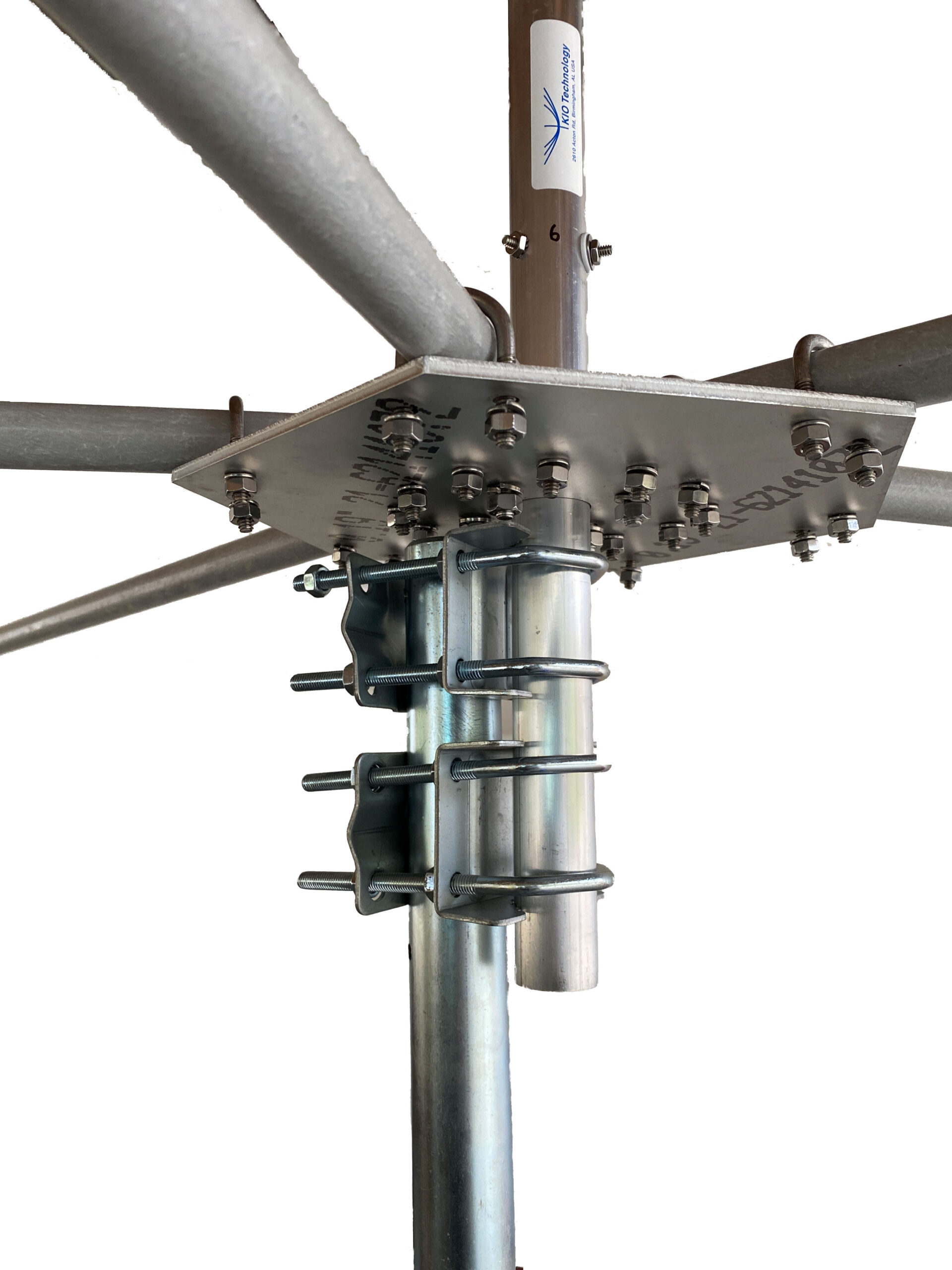
- Center Post: KIO shifted from square tubing to a heavy-duty round 6061-T6 aircraft aluminum center post with an air-coaxial design, completely eliminating exposed wires or loose coax that typically fails from flexing and moisture.
- Heavy-Duty Baseplate: Built from a thick, laser-drilled 12-inch 6061-T6 aluminum plate with high-grade aluminum-magnesium alloy flanges that clamp directly to your mast system.
- Spreaders & Cords: Thick fiberglass arms held by Kevlar support cords jacketed in UV-resistant Dacron — 700-pound breaking strength.
3. Versatile Mounting Options: 3 Reliable Methods
One of the best features of the K4KIO Hex Beam is its low physical overhead. At just 25–26 lbs with a compact 10.8-foot turning radius, you don’t need an industrial tower or commercial-grade rotator. It flies beautifully at 25–35 feet on a simple push-up mast. KIO supports three distinct mounting methods depending on your setup:
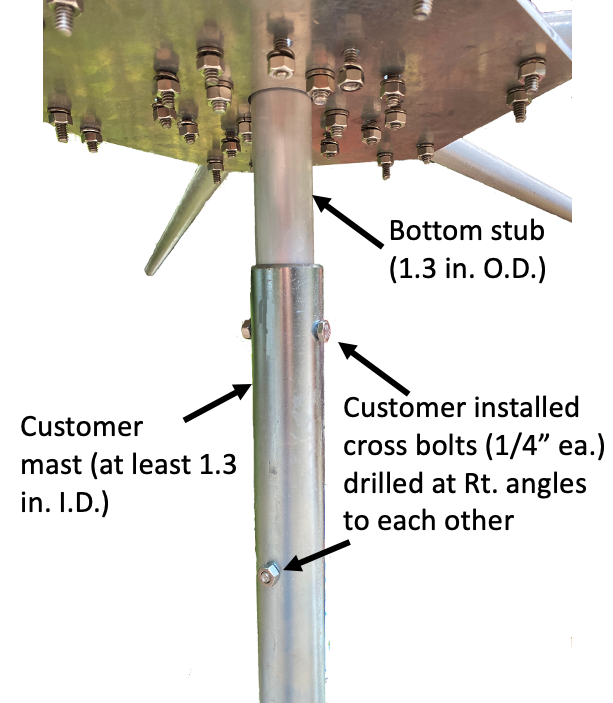
Method 1: Slip the Bottom Stub Into Your Mast
The baseplate features an integrated aluminum stub protruding roughly 8 inches below the plate with a 1.3-inch O.D. If your support mast has an I.D. of at least 1.3 inches, the antenna stub slides directly into the top of the mast. Drill two ¼-inch clearance holes through both pipes at right angles and secure with cross-bolts to lock it permanently against wind twist. The simplest and most effective method.
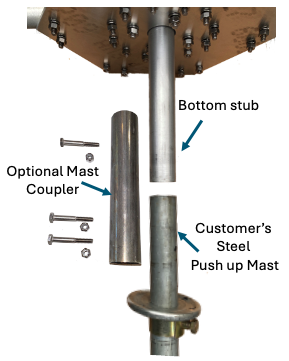
Method 2: Couple to a Steel Push-Up Mast
Standard Rohn or Channel Master top sections are typically 1.25-inch O.D. — they won’t directly mate with the 1.3-inch hex beam stub. Bridge the gap with an optional Mast Coupler sleeve (1.33-inch I.D.) that fits snugly over the baseplate stub and accepts the push-up mast top section. Two ¼-20 × 2-inch stainless steel cross-bolts eliminate any wobble or wind slippage completely.
Method 3: Pipe-to-Pipe Clamps
If your mast or rotator shaft prevents sliding pipes inside each other or drilling cross-bolt holes, a heavy-duty pipe-to-pipe clamp system works perfectly. A pair of rugged stainless steel jaw clamps mount the hex beam’s bottom post parallel to any existing mast pipe up to 2-inch O.D., creating a strong friction mount that handles aggressive rotational forces in heavy wind.
4. Incredible Weather Resilience
Don’t let the “umbrella” shape fool you — the K4KIO Hex Beam is built like a tank. Its symmetric, aerodynamic shape and low 5 sq. ft. wind load area means it sheds wind beautifully.
- High-Wind Performance: Operators in desert and coastal environments report the antenna easily surviving 90+ MPH wind gusts without structural deformation.
- The Ice Kit: For climates prone to freezing rain, K4KIO offers an optional Ice Kit (stabilizing vertical cords). Users report the antenna bowing under massive ice weight and springing right back into shape with zero broken elements once thawed.
5. Outstanding RF Performance & Band Coverage
Performance is where the K4KIO shines brightest, pulling in DX contacts that simple wire dipoles or verticals completely miss.
- 6 Bands, One Feedline: Elements for 20, 17, 15, 12, 10, and 6 meters all fed through a single 50-ohm coax — no external switches required.
- Broadband SWR: The G3TXQ geometry provides incredibly flat SWR curves — under 1.5:1 at center, rarely above 2:1 at band edges. Handles 1,500W continuous / 2,000W PEP thanks to premium Teflon terminal insulators.
- Rejection & Directivity: Front-to-back rejection of 10–14 dB. Operators transitioning from inverted-Vs or verticals report an immediate and noticeable drop in suburban QRM simply by rotating the beam.